
Ontario's New 110 km/h Limits Change the Road, Not the Rules of Fault
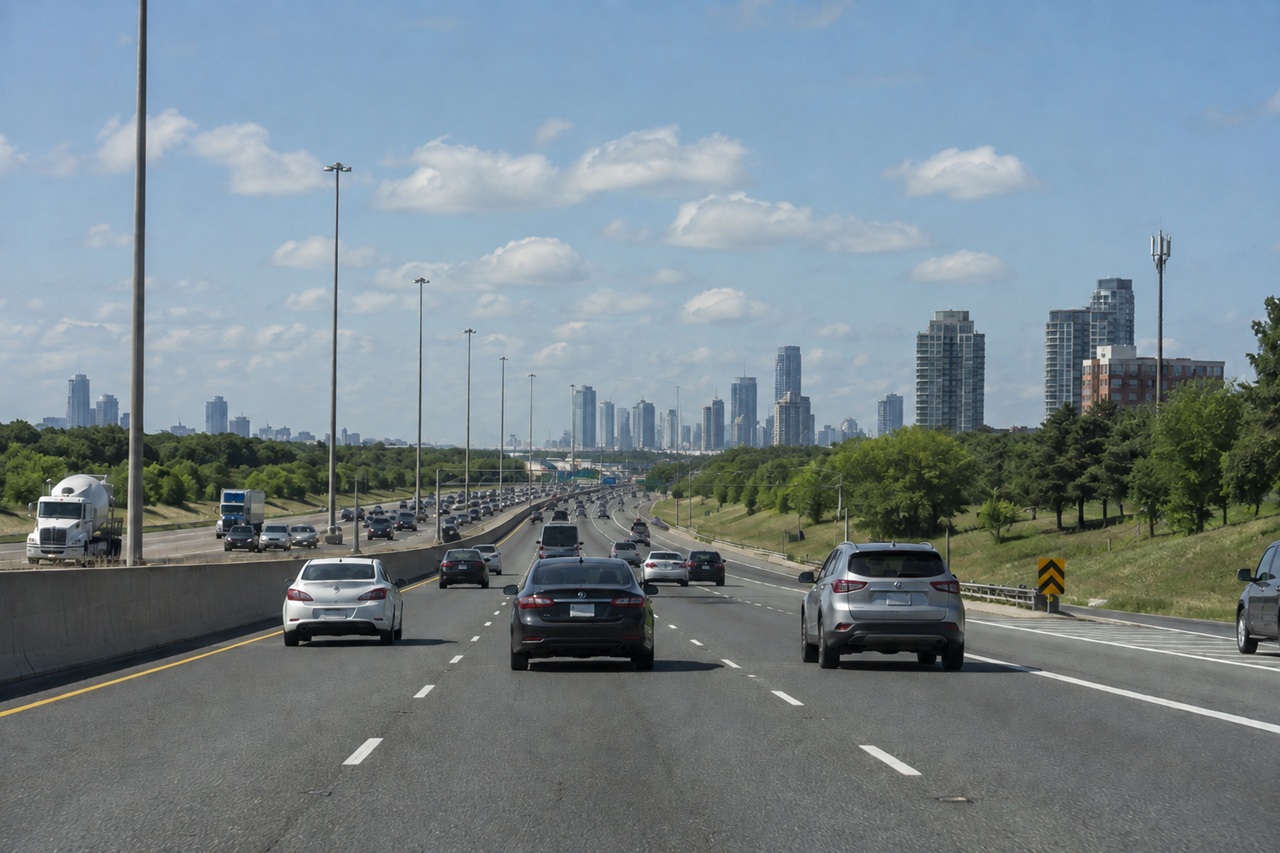
Ontario drivers are seeing a new number on more highway signs this summer. The province is expanding 110 km/h speed limits across hundreds of additional kilometres of Highway 401, Highway 400, the QEW and other major routes.
For anyone involved in a serious Ontario car accident, though, a higher posted limit doesn't mean drivers have permission to ignore traffic, weather, visibility, or the vehicles around them. The legal speed limit is still a maximum, not a guarantee that travelling at that speed is safe in every circumstance.
Our Toronto car accident lawyers at Smitiuch Injury Law represent people injured on highways throughout Ontario. The new limits may change how fast traffic legally moves, but they don't eliminate a driver's obligation to use reasonable care or the need to prove what actually happened when a collision occurs.
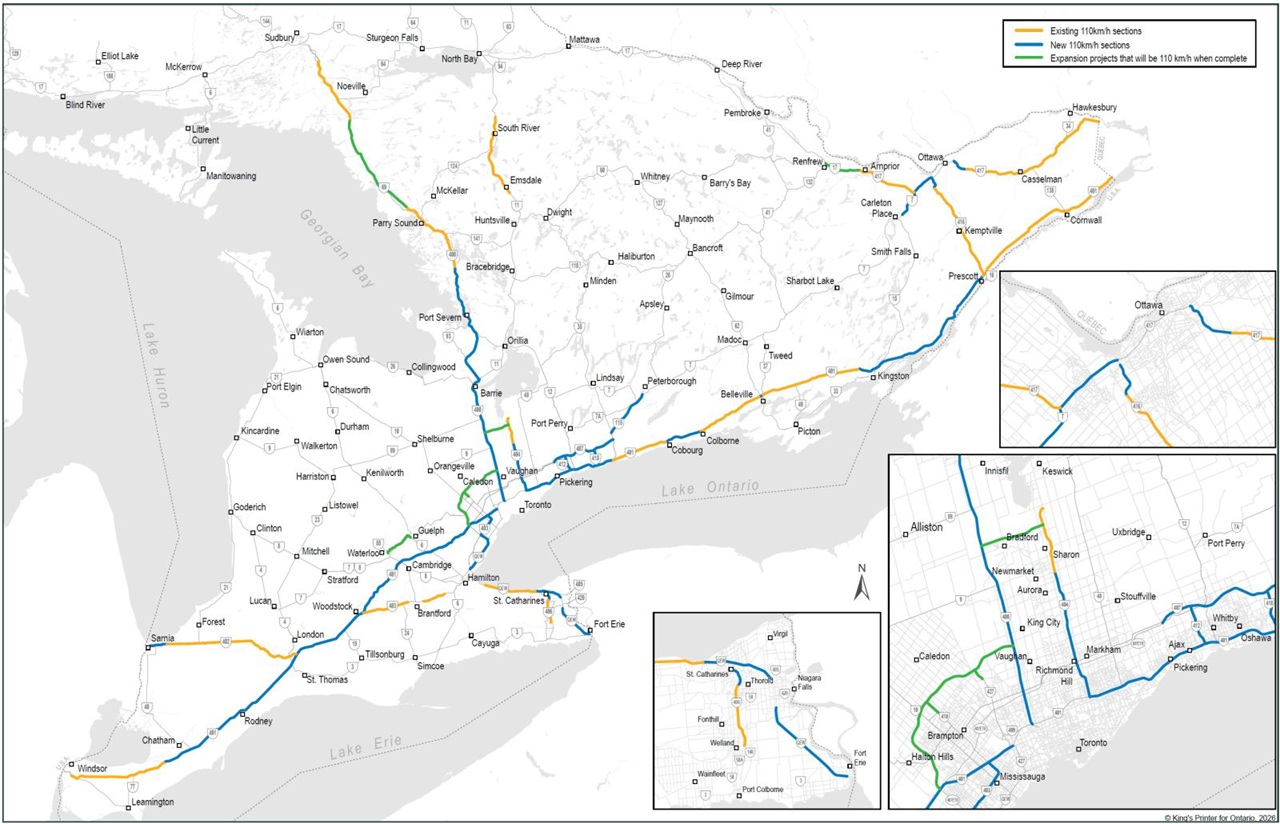
Which Ontario Highways Are Moving To 110 km/h?
On June 24, 2026, the Ontario government announced that the speed limit would increase from 100 km/h to 110 km/h on an additional 938 kilometres of provincial highways.
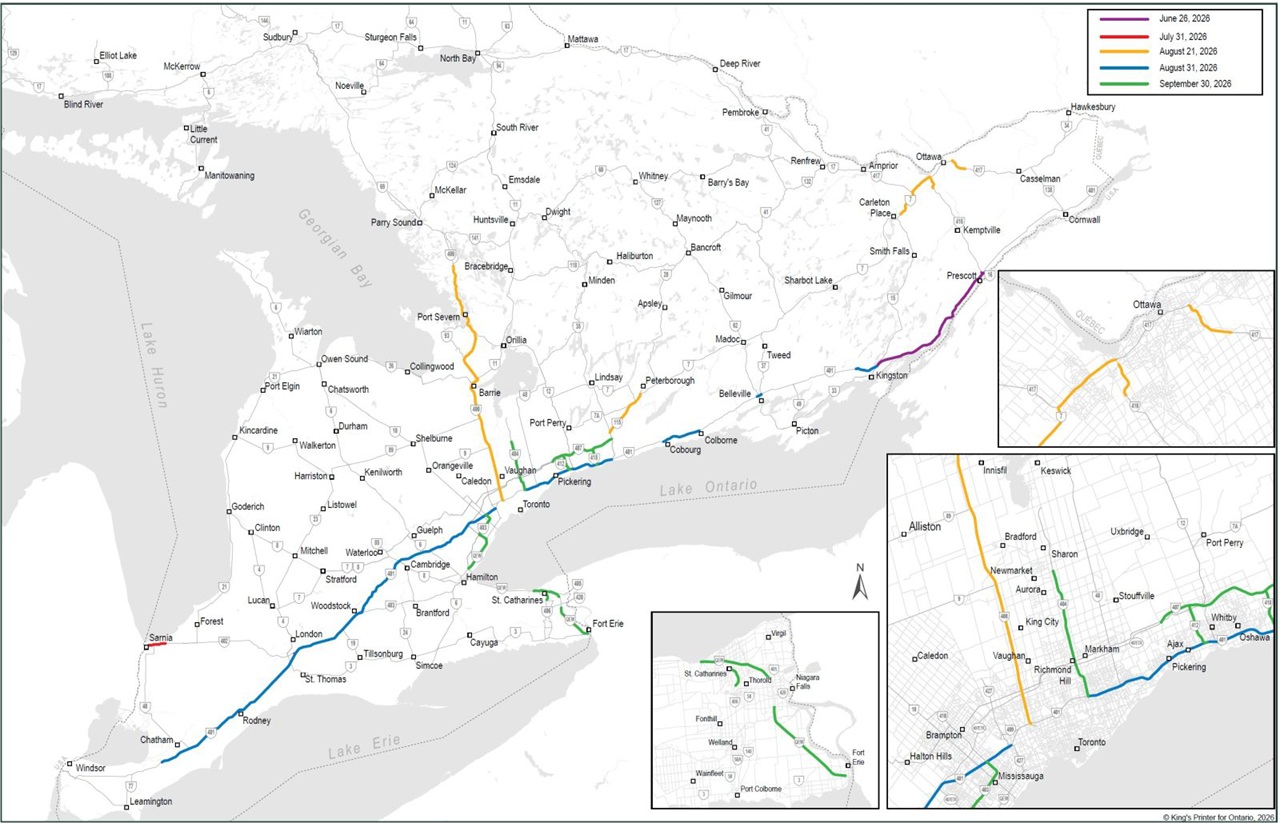
According to the Ontario Ministry of Transportation, the changes began June 26 and continue in stages through September 30, 2026. Once the rollout is complete, nearly 89 percent of Ontario's provincial highway network will have a posted limit of 110 km/h, compared with 43 percent before this expansion.
Highways included in the expansion include:
Ontario's Expanding 110 km/h Highway Network
The province says the selected highways were reviewed to confirm they were designed and engineered to accommodate the higher posted speed. Many Ontario freeways were originally designed for 110 km/h travel.
A 110 km/h Sign Does Not Answer Every Legal Question
One of the easiest mistakes to make is treating the posted speed limit as the answer to every issue after a collision. Ontario's legal system actually looks at speed differently depending on the type of claim involved.
| Issue After The Crash | What The 110 km/h Limit Means |
|---|---|
| Traffic Law | 110 km/h becomes the maximum posted speed on the designated highway section. Driving above it can result in a speeding charge. |
| Insurance Fault | Insurers generally apply Ontario's Fault Determination Rules based on the type of collision. Those rules do not simply ask whether someone was travelling below the posted limit. |
| Negligence Lawsuit | Actual speed, traffic, visibility, weather, following distance, and other circumstances may become evidence when deciding whether a driver used reasonable care. |
| Accident Benefits | Ontario's Statutory Accident Benefits may be available to an injured person regardless of who caused the collision. |
That distinction can become extremely important after a high-speed collision.
Higher Speed Means More Energy Has To Go Somewhere In A Crash
The change from 100 km/h to 110 km/h may sound modest, but speed has an outsized effect on collision forces.
Transport Canada notes that a vehicle's kinetic energy increases with the square of its speed. In practical terms, the same vehicle travelling at 110 km/h has approximately 21 percent more kinetic energy than it does at 100 km/h.
That doesn't mean every collision at 110 km/h will result in injuries that are 21 percent worse. Vehicle design, angle of impact, braking, seat belts, airbags, and many other factors affect the outcome. But it does illustrate why relatively small increases in speed can significantly change the forces involved in a crash.
The World Health Organization likewise identifies higher speed as a factor that increases both the likelihood of a collision and the severity of the resulting injuries. At highway speeds, those consequences can include serious car accident injuries such as fractures, spinal injuries, traumatic brain injuries, and permanent disability.
Driving 110 km/h Can Still Be Too Fast For The Conditions
A posted limit describes the maximum legal speed under the applicable rules. It doesn't eliminate the need to react to what is happening on the road.
Ontario's Highway Traffic Act prohibits careless driving without due care and attention or reasonable consideration for other road users. That means a driver may still create an unreasonable danger while travelling at or below 110 km/h.
Consider a driver maintaining 110 km/h during heavy rain while traffic ahead has slowed substantially. Another driver might remain at the limit despite dense fog, icy pavement, construction, or a vehicle stopped on the shoulder.
The fact that the speedometer never went above 110 km/h doesn't automatically establish that the driving was reasonable.
Ontario's Fault Determination Rules Work Differently Than Many Drivers Expect
This is where Ontario's insurance system becomes more complicated.
Insurance companies use the province's Fault Determination Rules to assign fault after many collisions. These rules classify common accident scenarios such as rear-end collisions, lane changes, intersection crashes, and vehicles entering controlled-access highways.
Surprisingly, the regulation generally directs insurers to determine fault without considering circumstances such as weather, road conditions, or visibility.
Speeding can still affect the analysis in certain situations. For purposes of the Fault Determination Rules, a driver charged after the collision with exceeding the speed limit by 16 km/h or more is treated as having been charged with a specified driving offence. Depending on the circumstances and how the other fault rules apply, that can move the analysis toward ordinary rules of law.
That's different from saying every driver who was travelling too fast for rain or snow automatically receives a higher insurance-fault percentage.
A Lawsuit Can Look Beyond The Insurance Company's Fault Percentage
The Fault Determination Rules are primarily rules insurers use to determine fault under Ontario automobile insurance law. They don't necessarily decide every negligence issue in a personal injury lawsuit.
When someone is seriously injured and brings a claim against another driver, evidence about how that person actually drove can matter.
Factors that may become important include:
A person injured in a collision can also be found partly responsible. Ontario's contributory negligence rules can reduce compensation when the injured person contributed to causing the crash or the resulting harm.
That's why proving fault after an Ontario highway accident requires more than pointing to the speed-limit sign.
Vehicle Data Can Show What Happened Seconds Before Impact
Highway crashes often happen too quickly for the people involved to accurately estimate speed. Fortunately, modern vehicles and roadway technology may provide other ways to reconstruct what happened.
Important evidence can include:
Video evidence after a Toronto car accident can disappear quickly because some systems automatically overwrite older footage. The same is true of witness memories, which can become less precise as time passes.
Preserving witness evidence, photographs, and available electronic information early can therefore become particularly important when speed is disputed.
Accident Reconstruction Can Become Important In A High-Speed Crash
Some collisions leave conflicting stories and no clear video showing what happened.
In those cases, an accident reconstruction professional may analyze physical evidence, vehicle data, roadway measurements, photographs, and other information to develop an opinion about the mechanics of the crash.
This type of analysis can be especially valuable when the dispute involves whether someone was travelling substantially above the limit, failed to slow for traffic, or had enough time and distance to avoid the collision.
The evidence should drive the conclusion. An investigator shouldn't simply assume that a severe collision proves someone was speeding.
Higher Limits Do Not Change Ontario's No-Fault Accident Benefits
Another important distinction is that fault doesn't determine whether an injured person can initially access Ontario's statutory accident benefits.
Ontario accident benefits may provide assistance with medical care, rehabilitation, income replacement, and other qualifying losses regardless of who caused the collision.
A separate claim against an at-fault driver may become available when the legal requirements are satisfied. That claim can seek damages beyond the benefits available through the no-fault system.
The amount of compensation available after an Ontario car accident depends on the injuries, financial losses, available insurance, and the degree of fault attributed to the people involved.
A Highway 403 Case Shows How Serious Highway Injuries Can Become
Smitiuch Injury Law obtained a $2.4 million jury verdict for a driver injured while travelling westbound on Highway 403 in Hamilton.
In that case, snow and ice pushed from an overpass by a snowplow crashed through the vehicle's sunroof. The driver developed chronic pain and psychological injuries.
The defendants admitted liability, so the case wasn't a dispute about speeding or the new 110 km/h limits. However, it shows how a highway incident that unfolds in seconds can cause serious injuries and financial consequences that last for years.
The Ontario Court of Appeal later upheld the verdict.
Injured? Contact Our Toronto Car Accident Lawyers
Ontario's move toward 110 km/h highways doesn't change the fundamental question after a serious collision: What did each driver actually do?
Our Toronto car accident lawyers at Smitiuch Injury Law can examine vehicle data, police records, video, witness statements, road conditions, and other evidence to determine how the crash occurred. Where necessary, we can also work with accident reconstruction and medical professionals to explain both the collision and the injuries it caused.
If you or someone you love was seriously injured on Highway 401, Highway 400, the QEW, or another Ontario roadway, contact us for a free consultation. We can explain your insurance benefits, determine whether you may have a claim against an at-fault driver, and help preserve evidence before it disappears. We handle qualifying personal injury cases on a contingency fee basis, which means you don't pay legal fees unless we recover compensation for you.
"I was involved in a car accident, and there were 3 other people in our car. We were not at fault, and all of us had different injuries that affected our lives in many different ways. We were referred to Smitiuch Injury Law, and it was probably the best thing that could have happened to us out of this car accident." - Mary J., ⭐⭐⭐⭐⭐
